)
)
Have you ever stood in the pet food aisle wondering whether regular or grain-free food is healthier for your dog?
Grain-free dog food has surged in popularity as more dog parents start to ask a simple question: 'What really belongs in my pup’s bowl?'
But does grain-free automatically mean healthier? And are carbohydrates actually bad for dogs?
The answer isn’t black and white.
Dogs don’t have a nutritional requirement for carbohydrates. But that doesn’t mean carbohydrates have no place in their diet. When they come from digestible, nutrient-dense ingredients, carbohydrates can provide energy, fibre, and valuable micronutrients.
Concerns about grain-free diets also grew in 2018 when the US Food and Drug Administration (FDA) began investigating an association between some dog foods and canine dilated cardiomyopathy (DCM), a serious heart condition.
So, what’s really going on?
The most important question isn’t whether a food is grain-free. It’s whether the diet is complete and balanced, easy to digest, and designed with canine health in mind.
Let’s break down what grain-free really means, how carbohydrates affect your dog’s health, and what to look for when choosing the best food for your pup.
Key Summary
Grain-free dog food simply means the recipe does not contain cereal grains such as wheat, corn, or rice.
Grain-free food is not automatically healthier for dogs.
Many grain-free foods contain carbohydrates from ingredients like legumes or potatoes.
Dogs can digest carbohydrates and use them for energy, particularly when they come from nutrient-dense whole foods.
Whole-food carbohydrates such as vegetables, provide fibre, antioxidants, and micronutrients that support digestive health.
Research into the potential association between some grain-free and grain-containing diets and dilated cardiomyopathy (DCM) is ongoing.
The most important factor when choosing dog food is nutritional balance and ingredient quality, not whether the food contains grains.
What is grain-free dog food?
Grain-free dog food is made without cereal grains such as wheat, corn, rice, barley, oats, or sorghum.
The term is most commonly associated with dry dog food (kibble), where grains help create the crunchy texture during manufacturing.
But here’s where things can get confusing.
Grain-free doesn’t mean carbohydrate-free. Many grain-free products simply swap grains for other carbohydrate sources, often legumes such as peas, beans, or lentils.
If you're trying to choose the healthiest option, the label alone doesn’t tell the full story. What matters most is the overall nutritional balance and the quality of the ingredients.
)
Carbohydrates vs grains: what’s the difference?
Carbohydrates are one of the three main macronutrients in food, alongside protein and fat. They provide energy and can come from many different ingredients, including vegetables, fruits, legumes, and grains.
All grains are carbohydrates.
But not all carbohydrates are grains.
This means a dog food can be labelled grain-free while still containing a significant amount of carbohydrates from other sources.
Understanding where those carbohydrates come from — and how they’re processed — is often more important than whether grains are included.
The different types of carbohydrates: simple, complex, and fibre
Carbohydrates generally fall into three categories: simple carbohydrates, complex carbohydrates, and dietary fibre. Each plays a different role in digestion and energy release.
When carbohydrates come from whole foods such as vegetables, they often deliver more than energy. They also bring fibre, antioxidants, and micronutrients that support overall health.
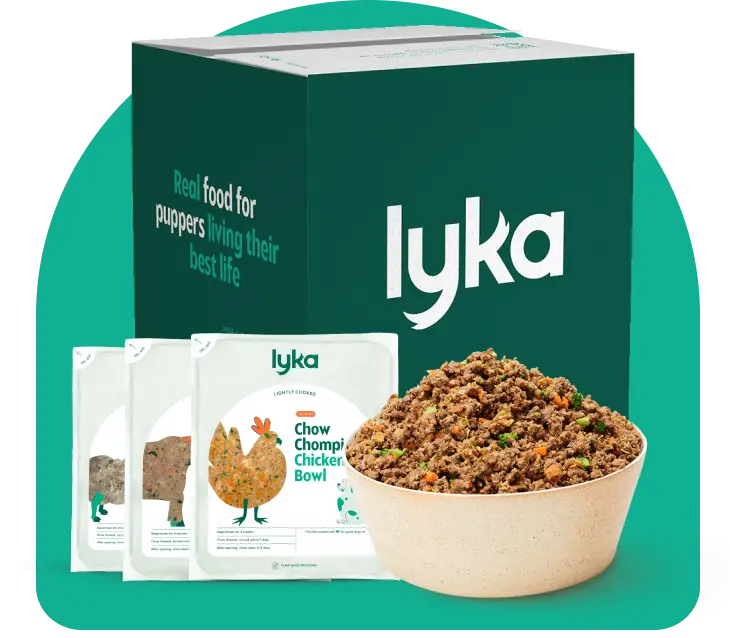
In Lyka meals, for example, carbohydrates come from nutrient-dense ingredients like vegetables, which provide steady energy while supporting digestive health.
What are simple carbohydrates?
Simple carbohydrates are sugars made of small molecules that are quickly digested and absorbed by the body. Examples include glucose and fructose.
They provide rapid energy, which can be useful for short bursts of activity. However, large amounts of refined simple carbohydrates — common in ultra-processed dog food — may cause rapid spikes and drops in blood sugar.
When simple sugars occur naturally in whole foods like vegetables, they’re usually balanced with fibre and other nutrients that help slow digestion and regulate energy release.
What are complex carbohydrates and resistant starch?
Complex carbohydrates consist of longer chains of sugar molecules, which take longer to break down during digestion. This results in slower, more stable energy release.
Whole foods like sweet potatoes, pumpkin, quinoa, and legumes contain complex carbohydrates.
Some complex carbohydrates also contain resistant starch, which resists digestion in the small intestine and travels to the large intestine. There, it can feed beneficial gut bacteria and support the microbiome.
Fibre and fermentation
Dietary fibre plays an important role in your dog’s digestive health.
There are two main types:
Soluble fibre, which forms a gel during digestion
Insoluble fibre, which adds bulk and supports regular bowel movements
Some fibres are fermented by beneficial bacteria in the large intestine, producing compounds that support the gut microbiome.
Balanced fibre intake helps support digestion, stool quality, and a healthy gut environment.
Whole vegetables such as carrots, broccoli, and cauliflower naturally provide a mix of fibre types that support digestive health.
)
Is grain-free dog food good for dogs?
Grain-free dog food is not necessarily better for dogs. While it can benefit dogs with a diagnosed grain allergy or intolerance, most dogs can digest grains without issue. What matters more is whether the diet is complete, balanced, and made from digestible ingredients.
Some grain-free dog foods replace grains with large amounts of legumes or potatoes, which may still provide significant carbohydrates. This is why veterinarians often recommend focusing on overall nutritional balance rather than the grain-free label alone.
Healthy carbs for dogs: what to prioritise
Many dog parents want to avoid ingredients that sound unnecessary or overly processed. The key is understanding which carbohydrates actually support your dog’s health — and which ones are simply there to bulk out dry food.
Dogs are biologically adapted to digest carbohydrates. While their diets should primarily consist of high-quality animal protein and healthy fats, dogs produce enzymes like amylase that allow them to break down starches into usable energy.
Carbohydrates can be a valuable part of a dog’s diet when they come from nutrient-dense whole foods rather than refined ingredients.
The difference between refined and whole food carbs
Carbohydrates have been given a bad name in recent years, but not all carbs are the same.
Refined carbohydrates — such as corn, wheat, rice, or potato starch — are commonly used in dry dog food because they are inexpensive and help form the pellets during high-temperature extrusion.
This processing method can reduce the natural nutrient content of ingredients, which is why manufacturers often add synthetic vitamins and minerals after cooking.
In contrast, whole-food carbohydrate sources such as vegetables, berries, seeds, and pseudo-grains tend to have a lower glycaemic load and release energy more gradually. They also provide fibre, phytonutrients, and micronutrients that support overall health.
Fresh, gently cooked dog food allows the ingredients to retain more of their nutrient value, taste, texture and moisture. It makes the food easier to digest, so the nutrients are more readily absorbed, and helps to keep your dog hydrated.
Best carb sources for dogs
Some carbohydrate sources offer significantly more nutritional value than others. Whole-food ingredients that deliver fibre, micronutrients, and antioxidants can support long-term health while providing sustained energy.
Here are some of the best carbohydrate sources for dogs:
Sweet potato
A nutrient-dense root vegetable rich in fibre, vitamin A, vitamin C, and potassium. Sweet potato is also relatively low on the glycaemic index, releasing energy slowly.
Pumpkin
Pumpkins, like Butternut Squash, are high in soluble fibre, which supports digestive health and stool quality. They also contain beta-carotene; a potent antioxidant, and they contain vitamins that support your pup’s immune system.
Oats
A low-allergen grain that contains fibre, B vitamins, and minerals. Oats provide slow-release energy.
Brown rice
Brown rice is less processed than white rice and contains fibre, manganese, and selenium. It can be a digestible energy source for many dogs.
Quinoa
Often referred to as a pseudo-grain, quinoa contains all nine essential amino acids along with antioxidants, essential minerals, and protein.
Blueberries
While not a major energy source, blueberries provide natural sugars alongside powerful antioxidants that support cellular health.
)
Best carbs for dogs with allergies
If your dog has a food allergy, avoiding the trigger ingredient is essential.
Although protein is the most common food allergen in dogs, wheat and corn are among common grain allergens.
Root vegetables like carrots and sweet potatoes can be useful carbohydrate sources for dogs with sensitivities because they provide fibre and nutrients while keeping ingredient lists simple.
Grains like oats and pseudo-grains such as quinoa are considered more novel to dogs, so they’re less likely to trigger an immune response.
Look for meals that avoid using common allergens, like Lyka’s Hypoallergenic Pro. Made with goat, a novel protein, this meal contains nutritious carbs including carrots, cauliflower, blueberries and blackberries.
It’s important to remember that any ingredient has the potential to be an allergen. So, if you think that your pup may have a food allergy or sensitivity, consult your vet for guidance.
)
Here’s what you need to know about DCM
Canine dilated cardiomyopathy (DCM) is a disease that affects the heart muscle, causing enlargement of the left ventricle, which thins and weakens the muscular wall, reducing the ability to generate enough pressure to pump blood throughout the body.
Signs of DCM can be hard to identify but can include lethargy, weakness, weight loss, coughing and heart arrhythmias, which can be fatal. If you suspect your dog is showing signs of DCM, check in with your vet as soon as you can.
The link between grain-free dog food and DCM
In 2018, the U.S. Food and Drug Administration (FDA) began investigating reports of dilated cardiomyopathy (DCM) in dogs eating certain diets, including some grain-free dry foods. Research is ongoing, and scientists are exploring whether formulation factors (such as ingredient ratios and nutrient bioavailability) may play a role.
Scientists are currently exploring several possible factors, including:
how certain ingredients affect taurine metabolism
nutrient bioavailability
overall diet formulation
ingredient ratios in ultra-processed foods
Why do dogs get DCM?
The exact causes of DCM in dogs are not yet understood, but several factors have been associated with its development. These include genetic predisposition, taurine deficiency, nutritional factors, infectious causes,and toxin exposure.
Genetic predisposition to dilated cardiomyopathy
Certain dog breeds are more prone to developing DCM. Breeds such as Doberman Pinschers, Boxers, Great Danes, and Irish Wolfhounds have a higher incidence of DCM. In these cases, the disease is believed to have a hereditary component with specific genetic mutations.
The link with taurine deficiency and DCM
Some breeds, like Cocker Spaniels, are more prone to DCM, as well as certain large and giant breeds. This is due to a deficiency in taurine that can happen when a pup isn’t getting enough taurine in their diet, or issues with taurine metabolism. In the 90’s, there was an increase in cats that developed DCM. Pet food companies added additional taurine to their diets, and DCM in cats is rarely seen today.
Other nutritional factors affecting dogs
In addition to taurine deficiency, other nutritional factors have been implicated in dogs with DCM. Diets that are low in essential nutrients, such as certain amino acids, carnitine, or antioxidants, may contribute to the development of the disease.
Infectious causes leading to DCM
Certain infections, such as canine parvovirus or Chagas disease, can lead to myocarditis (inflammation of the heart muscle). This can lead to DCM.
Toxin exposure
Exposure to certain toxins or drugs can damage the heart muscle, potentially leading to DCM in dogs. Some medications (including certain chemotherapy drugs) can have toxic effects on the heart.
The issues with grain-free food
While not all grain-free food is bad, some vets advise against grain-free dog food due to its publicised potential connection to DCM.
High-fibre legumes aren’t always a good thing
Legumes, such as beans, chickpeas and peas, are high in fibre and starch. Dogs don’t need a high-fibre diet, in fact, some high-fibre diets have been associated with taurine deficiency.
While legumes can be healthy for your pup in small amounts, the proportion of legumes in grain-free dog food can be significantly higher than what’s nutritionally required.
When it comes to diet-associated DCM, it’s the diets containing high levels of legumes and potatoes that have been most closely linked. It’s thought that these ingredients are higher in particular ‘anti-nutrients’ that reduce the bioavailability and absorption of amino acids, like taurine.
However, the mechanism of diet-associated DCM isn’t clear. It’s not just related to dietary taurine deficiency; it’s likely to be connected to the gut microbiome and carnitine dysregulation, amongst other things.
)
Low protein means low zinc and amino acid content
Some dry dog food can contain more than 50% carbohydrates, which means at least half comprises non-essential sugars. To increase the overall protein content on the label (which is as low as 20-30% in most brands) without having to increase the proportion of expensive meat content, dry food companies often add cheap plant protein: usually legumes and pulses.
Plant protein has a different composition of minerals and amino acids to animal protein. When they make up a large portion of the diet, they may influence taurine levels and other nutrients linked to heart health.
Watch out for products with beet pulp
Not to be confused with nutrient-rich beetroot powder, beet pulp is the fibrous by-product of sugar beet processing. It’s sold to dog food companies who use it in both regular and grain-free kibble. Some research suggests beet pulp may reduce taurine status in dogs under specific diet conditions, which is one reason we avoid beet pulp in our recipes.
5 myths about the ‘benefits’ of grain-free dry food
Myth #1: Grain-free dog food leads to a healthier coat and skin
Fact: A complete and balanced diet is the ideal foundation for healthy skin and a shiny coat.
Diets that prioritise high-quality animal protein and low-GI whole-food carbohydrates over high volumes of legumes are better placed to support skin and coat health.
Myth #2: Dogs that eat grain-free food create smaller stools and release less gas.
Fact: Beans and peas are high in insoluble fibre, which ferments in the intestines, releasing gas.
In small amounts, these ingredients can aid the movement of food through the digestive system, but in large amounts, they create gassiness and bulky stools.
Myth #3: Oral health is improved on a grain-free diet
Fact: Oral health is improved by daily brushing and regular check-ups at the vet.
However, emerging research shows that dogs on a diet of fresh, wholefood ingredients were at a lower risk of dental disease.
)
Myth #4: Dogs gain more energy when they eat grain-free food
Fact: Dry dog food often uses high GI ingredients, such as corn, wheat and cereals that can cause spikes in your pup’s blood sugar levels.
This creates a short burst of energy followed by a heavy slump as their sugar levels drop.
To create the hard, dry texture of standard kibble, the majority of the ingredients are typically grain.
In grain-free products, high quantities of legumes and pulses are a cheap alternative because they create a similar texture and are suitable for mass production and support a long-shelf life. It’s best to look for diets containing low GI ingredients that release energy slowly.
Myth #5: Grain-free dog food supports weight management
Fact: Quite the opposite. Grain-free dry food can lead to weight gain due to its high carbohydrate content.
The most effective way to manage your dog’s healthy weight is by feeding a portion-controlled, complete and balanced wholefood diet in addition to regular exercise.
Although grains aren’t an essential element in your dog’s diet, some grains do have nutritional value. To make an informed decision on your pup’s diet, it’s important to understand the differences between grains and other key ingredients.
FAQs: grain-free dog food & carbs
Do Lyka meals have carbs in them?
Yes. Lyka meals contain fresh sources of low-glycaemic load carbohydrates for their nutritional value and slow-release energy.
You’ll find a range of fresh food carbohydrates in all Lyka meals like bright and tasty carrots in our Chicken, Beef, and Turkey Bowls. Each ingredient has been carefully selected for their low-glycaemic load and nutritional profile.
Do carbs make dogs gain weight?
Refined carbohydrates with a high glycaemic load can contribute to weight gain when consumed in excess.
Balanced diets that include appropriate portions of protein, fat, and whole-food carbohydrates help maintain a healthy weight.
Are sweet potatoes good carbs for dogs?
Yes. Sweet potatoes are a nutritious carbohydrate source that provides fibre, vitamins, and slow-release energy.
Do senior dogs need fewer carbs?
Senior dogs generally require fewer calories as their activity levels decrease. A balanced diet with appropriate portion control helps prevent weight gain and supports healthy ageing.
How can I tell if my dog isn't digesting carbs well?
If your dog isn’t digesting carbs or any other food well, here are some common signs to look out for:
Diarrhoea, or constipation
Vomiting
Gassiness
Are grain-free diets low-carb?
Not necessarily. Grain-free foods often replace grains with other carbohydrate sources such as legumes or potatoes.
Do I need to completely avoid grain-free ingredients linked to DCM?
Legumes are healthy for dogs in small quantities. To be safe, we don’t use any legumes in our recipes at Lyka.
Beet pulp, the by-product of beet processing, offers very little nutritional benefit for your dog and has also been proven to decrease taurine levels.
We use beetroot powder in our lamb bowl, which is simply whole, dehydrated beetroot that’s full of nutrients such as Vitamins A and C, manganese, and folic acid.
Will a “healthy” grain-free diet be better for my pup?
Not necessarily. By promoting grain-free food, dry food brands are following human food trends and appealing to pet parents who want to choose the healthiest option for their pup. But that doesn’t mean that a ‘grain-free’ diet is better for your pup than one that contains grains.
What’s the difference between grain-free and gluten-free diets?
Gluten is the protein in grains like wheat, barley and rye, but not all grains contain gluten.
A grain-free diet contains zero grains. However, gluten-free or wheat-free dog food may contain other grains, pseudo-grains and seeds, like quinoa.
The trend of gluten-free human food became popular in response to intolerances or allergies to gluten. Dogs that have gluten intolerance may experience gastrointestinal (GI) problems including bloating, vomiting, diarrhoea or constipation. Whereas, an allergy to grain or another ingredient will often trigger itchy skin, hives, ear infections as well as GI issues.
Dog food allergies are rare. Signs of a reaction to a specific protein can easily be mistaken for a grain allergy.
Why do dry food companies claim that dogs need carbohydrates for energy?
Carbohydrates are essential to dry food production, but dogs don’t have a nutritional requirement for carbohydrates and AAFCO doesn’t establish a minimum or maximum requirement in dog food. Dogs benefit from protein and healthy fats as their main energy source, not carbohydrates.
However, dogs are carni-omnivores; they prefer a carnivorous diet, but they can digest and benefit from healthy carbohydrates too.
Lyka recipes include vegetables and quinoa that have an abundance of micronutrients. These low-GI ingredients support optimal health, promote satiety and release energy gradually, unlike high-GI carbohydrates like potatoes, rice and corn.
Why Lyka goes against the grain
Food trends come and go. Your dog’s health shouldn’t depend on them.
Lyka meals focus on real food and balanced nutrition, not marketing labels. Each meal is formulated by Board-Certified Veterinary Nutritionists and gently cooked to preserve nutrients while keeping ingredients easy to digest.
That means high-quality protein, vegetables packed with micronutrients, and carbohydrates chosen for their low glycemic load and nutritional value.
The only ancient grain we use is organic white quinoa in our Turkey and Lamb meals. Quinoa is a protein superfood that contains all nine essential amino acids, with plenty of antioxidants and essential minerals.
The level of carbohydrates in our recipes doesn’t exceed 17% dry matter (25% DM for Hypoallergenic Pro), much of which comes from vegetables like sweet potato and butternut squash – great for steady energy and fibre for gut health.
)
)
)
)
)
)